SHORT ANSWER
The window period is the time between a possible exposure and when a test can detect HIV in the body.
This guide gives general information to help you prepare for a conversation with a qualified health professional. Your timing, health history, medicines, and local guidance can change what is right for you.
KEY POINTS
What to know
- 01
Different test types have different window periods.
- 02
A negative result taken too early may need follow-up testing.
- 03
Ask what test was used so you can plan the correct follow-up.
FAST FACTS
Fast facts
The most important, source-aligned points for this page—at a glance.
Each test type has a different window period.
A negative result taken too early may need repeating.
Ask which test was used so you can plan the correct follow-up.
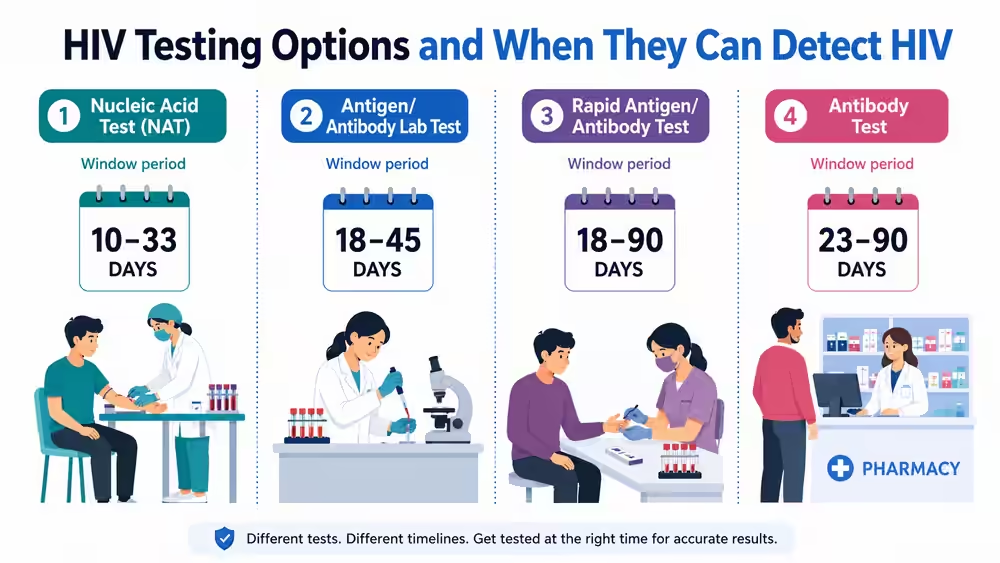
INFOGRAPHIC
HIV testing options and window periods
Different HIV tests can detect infection at different times after exposure.
- A NAT can usually detect HIV 10–33 days after exposure.
- A laboratory antigen/antibody test using blood from a vein can usually detect HIV 18–45 days after exposure.
- A rapid antigen/antibody test using finger-stick blood can usually detect HIV 18–90 days after exposure.
- An antibody test can usually detect HIV 23–90 days after exposure.
VISUAL SUMMARY
The HIV test window period: understand, check, act
Use the three points below as a quick visual map before reading the detailed guide.
Understand
Different test types have different window periods.
Check
A negative result taken too early may need follow-up testing.
Act
Ask what test was used so you can plan the correct follow-up.
This visual is a guide to the page—not a personal diagnosis or treatment recommendation.
BRING THIS TO A VISIT
Questions worth asking
A short list to help you get clear, personal answers from a provider.
Which HIV test are you using today?
When should I test again for this exposure?
How and when will I receive my result?
COMMON QUESTIONS
Before you move on
Can this page tell me exactly what I should do?
No. It can help you prepare, but a clinician should assess your individual situation—especially for urgent exposure, symptoms, testing timing, pregnancy, or medicine decisions.
How do I know the information is current?
Core medical claims are linked to public-health sources. Country-specific services, costs, legal rights, and clinical pathways must be locally verified before public launch.
SOURCES & REVIEW
Built for clarity and trust.
Content structure reviewed: 10 August 2026. Medical review and local service verification are required before public launch.
View the primary CDC HIV source