3 GUIDES
Plan your test
Start with why, when, and how often testing may make sense for you.
FROM UNCERTAINTY TO A PLAN
Understand when to test, which tests are available, what happens on the day, and what each result means.
EXPLORE THIS TOPIC
Each category opens into focused guides, with related care and next steps on every page.
FAST FACTS
Verified, plain-language facts to ground the rest of this section.
Exposure within 72 hours? Ask about PEP before you test.
Main test types: antibody, antigen/antibody, and nucleic acid (NAT).
A negative result may need repeating after the test's window period.
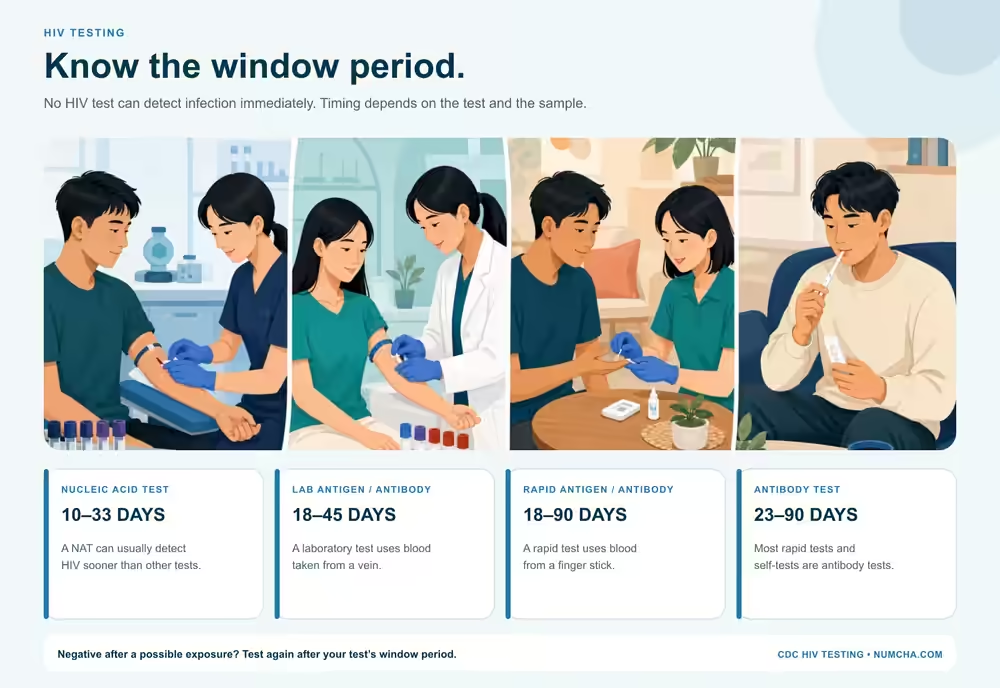
INFOGRAPHIC
Compare the usual window periods for four common HIV testing approaches.
VISUAL SUMMARY
Use this map to choose a category, open a focused guide, and continue to a practical next step.
Start with why, when, and how often testing may make sense for you.
Compare common test types and decide where you would feel comfortable testing.
Know what to expect before, during, and after testing.
This visual is a guide to the page—not a personal diagnosis or treatment recommendation.
3 GUIDES
Start with why, when, and how often testing may make sense for you.
3 GUIDES
Compare common test types and decide where you would feel comfortable testing.
3 GUIDES
Know what to expect before, during, and after testing.
DETAILED GUIDE
Understand when to test, which tests are available, what happens on the day, and what each result means. That short answer is the place to begin; what matters next is how it fits your situation—your reason for reading, the timing of any event, and the support you can reach. Treat this guide as a map: it can help you prepare and ask better questions, while a qualified health professional applies the details to you.
HIV tests look for different markers—antibodies, the p24 antigen, or the virus itself—using oral fluid or blood, so no test detects HIV immediately. The date of a possible exposure and the test used both shape how a negative result is read. A reactive screening or self-test result always needs follow-up, and a possible exposure within the last 72 hours means asking about PEP right away.
You do not need perfect medical words. Note any relevant dates, test names, or medicines, then choose one manageable action. For this page, a useful next step is start the first testing guide—a suggestion, not a rule. If it feels too big, make it smaller: save a phone number, check opening hours, or tell someone you trust. The plan can change as a result or new information arrives.