SHORT ANSWER
Correct condom use can help prevent HIV and certain other STIs; suitable lubricant can reduce breakage and make sex more comfortable.
This guide gives general information to help you prepare for a conversation with a qualified health professional. Your timing, health history, medicines, and local guidance can change what is right for you.
KEY POINTS
What to know
- 01
Use a new condom for each act of sex.
- 02
Check the package and expiry date.
- 03
Choose lubricant that is compatible with the condom material.
FAST FACTS
Fast facts
The most important, source-aligned points for this page—at a glance.
Taken before exposure, it greatly lowers the chance of getting HIV.
PEP is emergency prevention and must start within 72 hours.
Treatment with an undetectable viral load prevents sexual transmission.
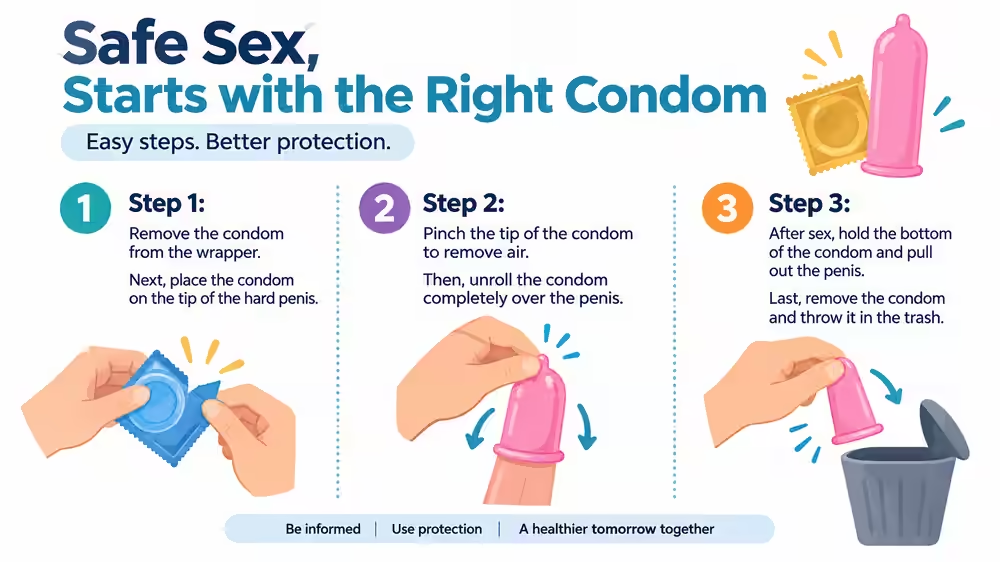
INFOGRAPHIC
Guide to using an external condom
Three simple steps for using an external condom correctly.
- Open the wrapper carefully and place the condom on the tip of the erect penis.
- Pinch the tip to remove air and unroll the condom completely.
- After sex, hold the base while withdrawing, then remove the condom and put it in the trash.
- Use a new condom for every act of sex.
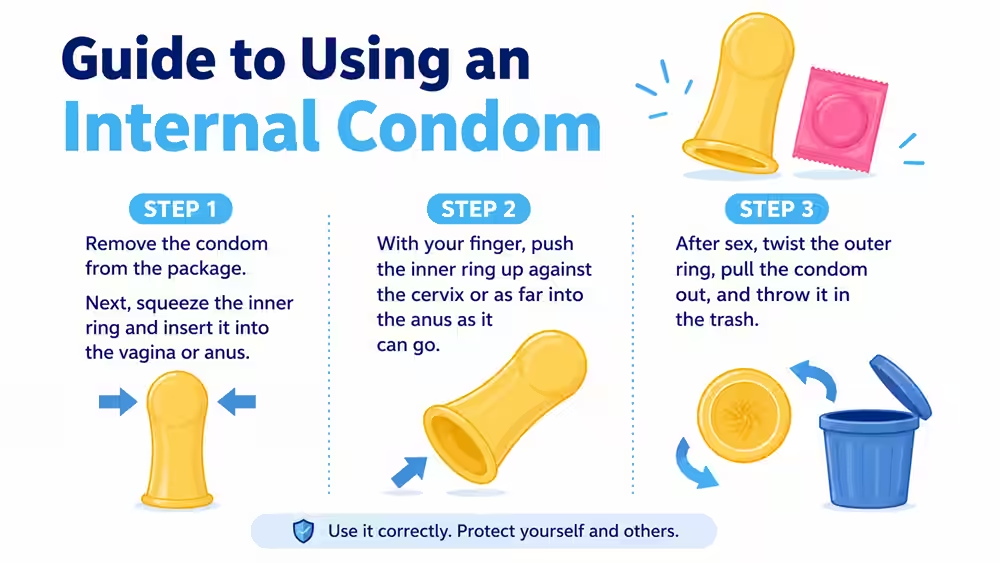
INFOGRAPHIC
Guide to using an internal condom
A visual guide to using an internal condom correctly.
- Squeeze the inner ring and insert the internal condom into the vagina or anus.
- Push the inner ring as far inside as it can comfortably go while the outer ring remains outside.
- After sex, twist the outer ring, remove the condom carefully, and put it in the trash.
- Do not use an internal and external condom at the same time.
VISUAL SUMMARY
Condoms and lubricant: understand, check, act
Use the three points below as a quick visual map before reading the detailed guide.
Understand
Use a new condom for each act of sex.
Check
Check the package and expiry date.
Act
Choose lubricant that is compatible with the condom material.
This visual is a guide to the page—not a personal diagnosis or treatment recommendation.
BRING THIS TO A VISIT
Questions worth asking
A short list to help you get clear, personal answers from a provider.
Am I a candidate for PrEP or PEP?
What testing or follow-up does this option need?
What will it cost and how do I access it?
COMMON QUESTIONS
Before you move on
Can this page tell me exactly what I should do?
No. It can help you prepare, but a clinician should assess your individual situation—especially for urgent exposure, symptoms, testing timing, pregnancy, or medicine decisions.
How do I know the information is current?
Core medical claims are linked to public-health sources. Country-specific services, costs, legal rights, and clinical pathways must be locally verified before public launch.
SOURCES & REVIEW
Built for clarity and trust.
Content structure reviewed: 10 August 2026. Medical review and local service verification are required before public launch.
View the primary CDC HIV source